When AI Shops for Your Customer: What FMCG Brands Need to Prepare For
What if your next customer never looks at your packaging?
An AI agent could decide what goes into their basket. For FMCG brands, preparing for that possibility means making product information as dependable as the product itself: clear ingredients, supported claims, accurate availability and reliable delivery.
Marketers have spent years understanding how colour, emotion and familiarity influence purchases. Those investments still matter. But an AI shopping assistant introduces another layer between customer preference and the final purchase.
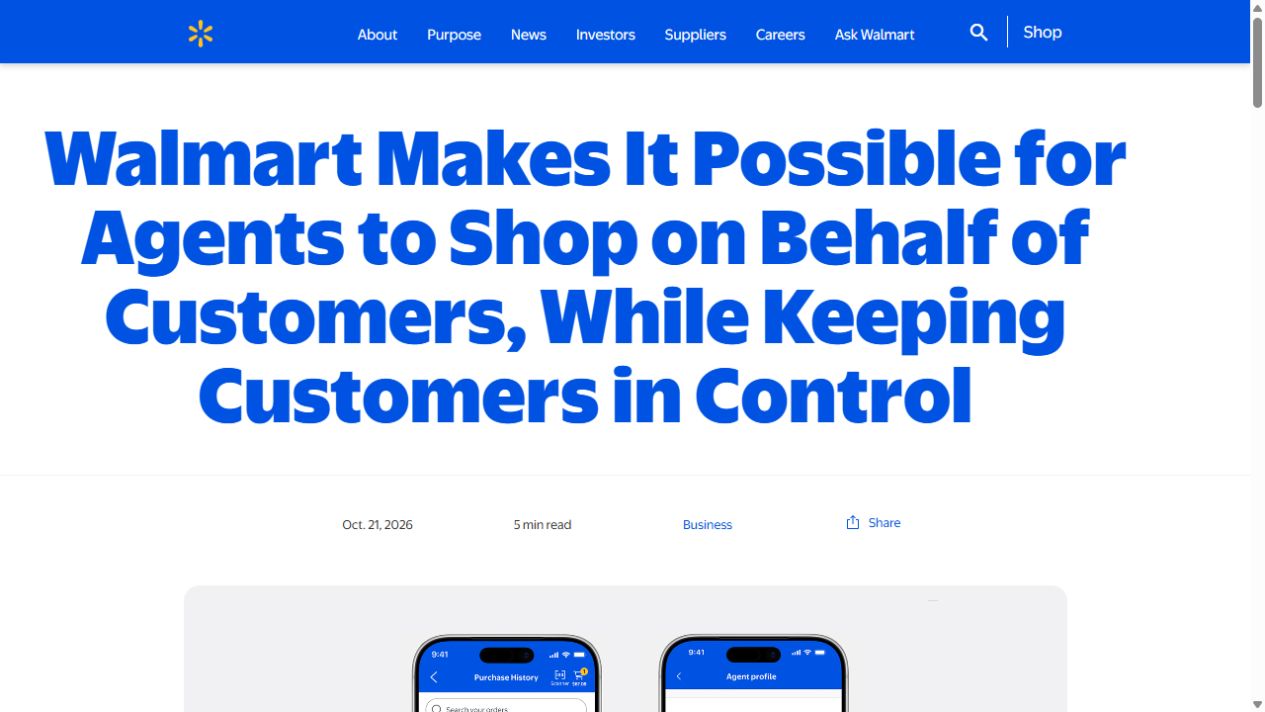
What Walmart announced
On 21 October, Walmart introduced plans for Agent Profiles and the Walmart Agent Gateway. The gateway begins with a beta for companies and developers; Agent Profiles are planned for the following month.
Customers will be able to authorise individual agents and set spending controls. Purchase approval is the default, and Walmart may require additional approval even within a spending limit. This is a staged rollout, not a claim that unrestricted background shopping is already available to everyone.
Imagine the next breakfast order
Now imagine the customer saying:
“Buy breakfast products for my family. Check the ingredients, compare added sugar, read the reviews and stay within my budget.”
An AI shopping agent searches, compares and helps select the products. With the necessary authorisation and a supported purchasing connection, it can also complete the purchase.
What persuades that agent to choose your brand?
Your pack says “healthy.”
The agent could compare nutrition information and serving sizes.
Your campaign promises quality.
The agent could look through reviews for recurring complaints.
Your brand promotes responsible sourcing.
The agent could check whether you provide credible evidence of where ingredients come from.
Your product meets the customer’s requirements.
But can it reach their doorstep when they need it?
These are potential buying criteria, not capabilities specifically promised in Walmart’s announcement. Their usefulness depends on the customer’s instructions, the information available and the reliability of the agent. AI can misread a claim, compare unlike serving sizes or rely on misleading reviews.
Brand preference still has a role
“Buy my usual brand” remains a powerful instruction. Walmart’s announcement specifically describes helping agents find a customer’s usual products. An assistant does not have to optimise only for the lowest price.
A customer may prioritise taste, dietary requirements, a familiar brand, convenience or a budget. The business question is how clearly your product information supports those preferences when a system helps make the choice.
From my experience in fresh food, customer preference alone does not secure a sale. Availability, freshness and delivery must support it. Agent-assisted shopping gives marketing, quality, sourcing, operations and technology another reason to work together.
Five checks for FMCG teams
- Make products comparable. Keep pack size, quantity, ingredients and nutrition information accurate across retail listings. Make serving sizes clear so customers and systems can interpret comparisons.
- Support the claims you make. Connect relevant certifications, sourcing statements and product claims to current evidence. Traceability is useful when the information is accessible and substantiated.
- Listen to the pattern in reviews. Investigate recurring concerns about taste, damaged packs, freshness or delivery. Reviews are imperfect evidence, but repeated operational issues deserve attention.
- Connect availability with the promise. Check stock accuracy, delivery coverage, fees and fulfilment expectations. A product that appears suitable can still fail the customer if it cannot arrive when required.
- Test a realistic buying instruction. Compare your product with alternatives against a specific household need and budget. Review what the assistant gets right, what it misses and which gaps originate in your own information.
This is not a promise of preferred placement in an AI recommendation. It is a practical way to improve the information and execution behind the choice.
Where I would start
Choose one important product range. Bring marketing, sales, quality and operations together to review its online listings. Agree who owns each correction and how changes to ingredients, stock or delivery will be kept current.
Before buying another AI tool, make sure the information describing your business is reliable enough to use.
Your product information now needs to work as hard as your packaging.
If an AI agent compared your product with three competitors, what would make yours win?
Get in touch to discuss how product data, operating processes and applied AI could support your FMCG business.
Source: Walmart’s announcement, 21 October 2026. Analysis reflects the announced rollout as of 24 October 2026; the business implications and checklist are my interpretation.